Posted on 17th Nov 2026
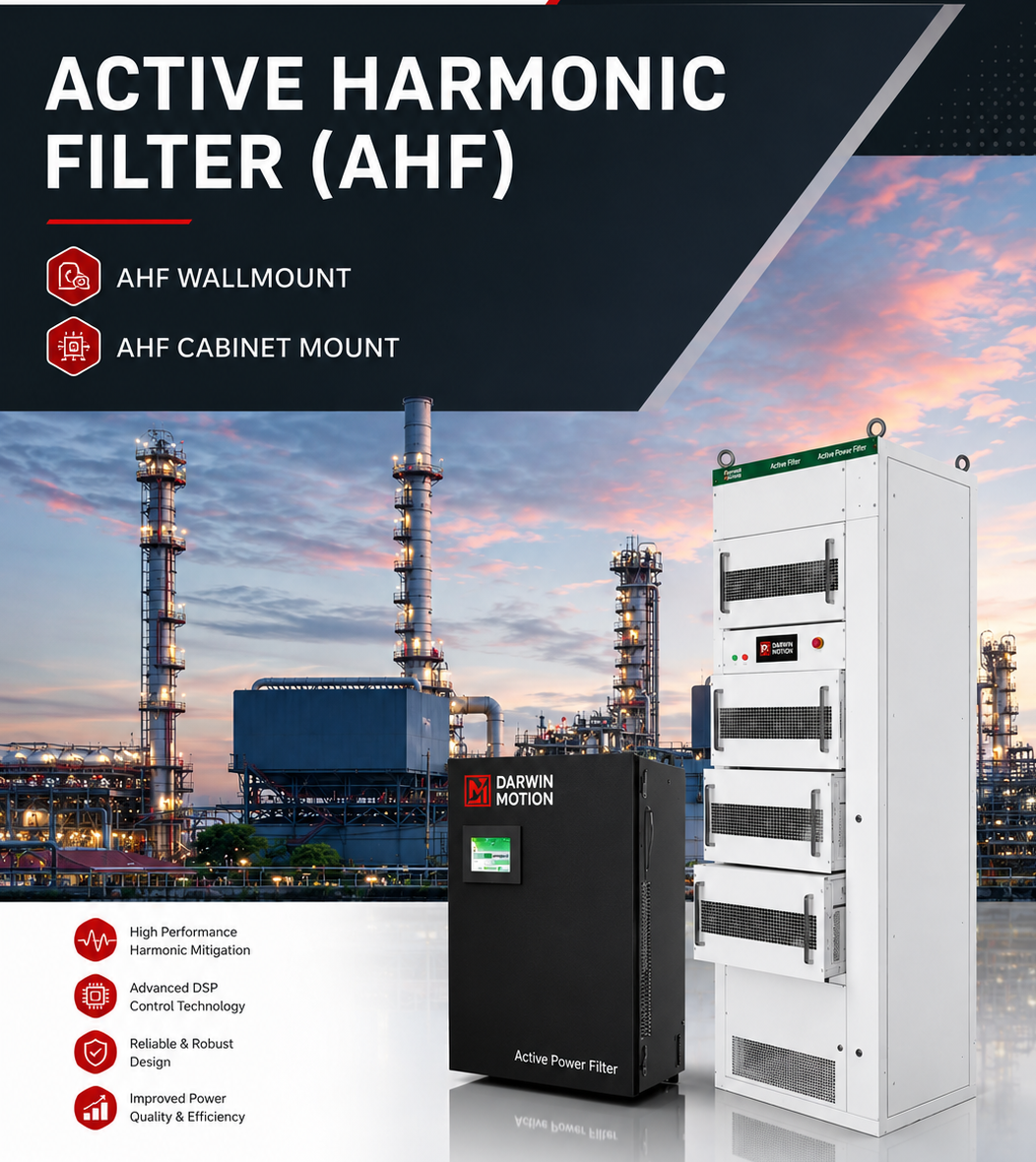
Modern industries depend on advanced electrical equipment, automation systems, Variable Frequency Drives (VFDs), servo drives, UPS systems, and other power electronic devices to improve productivity and operational efficiency. However, these technologies can introduce electrical disturbances that negatively affect the quality and stability of the power supply.
Poor power quality can result in transformer overheating, excessive energy losses, equipment malfunction, frequent circuit breaker tripping, and unexpected production downtime. These problems not only increase maintenance expenses but also reduce the overall efficiency of industrial operations.
An Active Harmonic Filter is an advanced power quality solution that helps industries control harmonic distortion, improve power factor, balance electrical loads, and enhance the reliability of electrical distribution systems.
As a trusted Darwin Motion AC Drive Manufacturer, Darwin Motion provides advanced industrial automation and power quality solutions designed to support efficient, stable, and reliable electrical operations.
Power quality problems refer to disturbances or irregularities in the electrical supply that affect the performance of electrical equipment and industrial machinery. These disturbances can occur due to nonlinear electrical loads, sudden load variations, switching operations, electrical faults, and improper power distribution.
Some of the most common power quality issues experienced in industrial facilities include:
Identifying and addressing these issues is essential for maintaining efficient industrial operations and protecting valuable electrical infrastructure.
Harmonic distortion is one of the most common power quality problems in modern industrial facilities. It occurs when nonlinear loads draw electrical current in a distorted waveform instead of a smooth sinusoidal waveform.
Equipment such as VFDs, UPS systems, rectifiers, welding machines, battery chargers, and servo drives can generate harmonic currents that affect the entire electrical distribution network.
An Active Harmonic Filter continuously monitors the electrical network and injects compensating currents to counteract unwanted harmonic components. This helps reduce Total Harmonic Distortion (THD) and improves the quality of electrical current.
Excessive harmonic currents can increase electrical losses in transformers, cables, and other distribution equipment. These additional losses generate heat, which may reduce equipment efficiency and accelerate insulation deterioration.
Continuous overheating can also increase maintenance requirements and shorten the operating life of expensive electrical infrastructure.
By reducing harmonic currents, active harmonic filtering helps minimize harmonic-related heating and electrical losses. This supports better transformer performance, improved cable efficiency, and enhanced electrical system reliability.
A low power factor is another significant challenge for industrial facilities. It can increase reactive power demand, raise electricity costs, and reduce the effective capacity of electrical distribution equipment.
Industries operating multiple motors, inductive loads, and power electronic devices may experience poor power factor conditions that affect overall electrical efficiency.
Advanced Active Harmonic Filters with reactive power compensation capabilities can help improve power factor by dynamically compensating reactive currents. This reduces unnecessary reactive power demand and supports more efficient electrical system operation.
Harmonic currents can interact with capacitor banks and electrical system impedance, potentially creating resonance conditions. These conditions may cause excessive current flow, overheating, and premature capacitor bank failures.
Frequent capacitor failures increase maintenance expenses and can affect the stability of industrial power distribution systems.
An Active Harmonic Filter dynamically compensates harmonic currents and helps reduce harmonic-related stress on capacitor banks. Proper system assessment and coordination are important to achieve reliable operation.
Excessive harmonic currents can increase RMS current levels and create additional thermal stress on circuit breakers and electrical protection devices. This may contribute to unwanted tripping and unexpected equipment shutdowns.
By compensating harmonic currents, active filtering helps reduce unnecessary current distortion and harmonic-related stress on electrical distribution equipment. This can minimize power quality-related interruptions when the filter is correctly selected and installed.
Unequal current distribution across three electrical phases can cause neutral current problems, additional heating, and reduced electrical system efficiency. Industrial facilities with unevenly distributed loads may experience these issues during regular operations.
Advanced Active Harmonic Filters with load-balancing functionality can redistribute compensating currents to improve three-phase current balance. This helps maintain better electrical distribution and supports reliable equipment performance.
Harmonic distortion increases electrical losses in transformers, cables, motors, and other power distribution components. Over time, these losses can increase operating expenses and create additional maintenance requirements.
An Active Harmonic Filter reduces unwanted harmonic currents, helping minimize associated electrical losses. Improved power quality can also reduce harmonic-related equipment stress and support long-term operational efficiency.
An Active Harmonic Filter uses advanced power electronics and intelligent digital control technology to detect and compensate unwanted harmonic currents in an electrical system.
The working process generally involves the following steps:
Unlike conventional passive filters designed for specific harmonic frequencies, active filtering technology can dynamically respond to changing electrical load conditions.
Selecting the right power quality solution is essential for maintaining reliable industrial operations. Darwin Motion AC Drive Manufacturer focuses on advanced industrial automation, motor control, and power quality technologies designed to meet modern industrial requirements.
Darwin Motion offers intelligent Active Harmonic Filter solutions that help industries reduce harmonic distortion, improve power factor, balance three-phase loads, and enhance overall electrical system performance.
Active harmonic filtering technology is particularly beneficial for industrial and commercial facilities operating multiple nonlinear electrical loads. Darwin Motion solutions can be considered for various applications where harmonic mitigation and improved power quality are required.
Installing an appropriately selected Active Harmonic Filter can provide several operational and electrical benefits for industrial facilities.
Power quality is a critical factor in maintaining efficient, safe, and reliable industrial operations. Harmonic distortion, poor power factor, transformer overheating, capacitor failures, and frequent circuit breaker tripping can negatively affect electrical infrastructure and increase operating costs.
Installing an advanced Active Harmonic Filter can help industries overcome these challenges by dynamically compensating harmonic currents and improving electrical system performance.
Darwin Motion AC Drive Manufacturer provides advanced industrial automation and power quality solutions designed to support modern industrial requirements. With intelligent harmonic compensation, reactive power management, and three-phase load balancing capabilities, Darwin Motion Active Harmonic Filters help businesses work towards improved energy efficiency, equipment protection, and reliable industrial performance.
Improve your industrial electrical system performance with Darwin Motion. Explore our Active Harmonic Filter solutions and discover how advanced harmonic mitigation technology can help your business achieve better power quality and operational efficiency.


