Posted on 30th Sep 2026
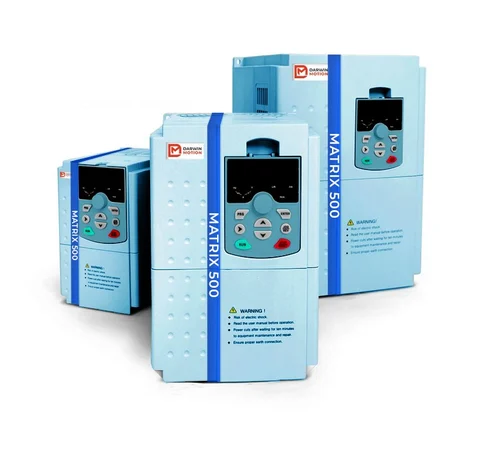
High Volume Low Speed (HVLS) fans are widely used in warehouses, factories, manufacturing plants, workshops, logistics centers, commercial buildings and other large spaces where effective air circulation is required. Because HVLS fans operate with large-diameter blades and are generally designed for continuous operation, accurate motor speed control is important for achieving the required airflow while maintaining efficient operation.
Drives for HVLS fans provide variable-speed control by adjusting the frequency and voltage supplied to the motor. This allows operators to select an appropriate fan speed according to the cooling and ventilation requirements of the facility.
Traditional motor control methods may provide limited flexibility when the required airflow changes throughout the day. An AC drive allows the motor speed to be adjusted according to actual operating requirements.
For applications where ventilation demand varies, speed control can help reduce unnecessary motor operation at full speed. Since fan loads are variable-torque applications, reducing speed can significantly reduce the power required by the motor.
Energy consumption is an important consideration for large industrial ventilation systems. HVLS fans can cover substantial floor areas, and controlling their speed according to actual requirements can help avoid unnecessary energy consumption.
AC drives are particularly useful for variable-torque loads such as centrifugal fans. When fan speed is reduced, the power requirement can decrease substantially. This makes variable-speed control a practical solution for facilities where ventilation requirements change throughout operating hours.
Different areas of a facility may require different levels of airflow. An HVLS fan drive enables the operator or automation system to increase or decrease fan speed according to temperature, occupancy, production activity or ventilation requirements.
Large HVLS fan motors can experience high starting current when started directly across the line. A variable frequency drive can gradually increase motor frequency and voltage, allowing the fan to accelerate smoothly.
Controlled acceleration can reduce sudden mechanical stress on the motor, fan assembly and associated mechanical components. Similarly, controlled deceleration can provide a smoother stopping process.
Drives for HVLS fans can be used across a wide range of industrial and commercial environments where large-volume air circulation is required.
Manufacturing plants, engineering workshops and processing facilities can use variable-speed HVLS fans to maintain comfortable working conditions and improve air circulation across large production areas.
Warehouses often have large floor areas and high ceilings. HVLS fans equipped with AC drives can provide adjustable airflow based on operational requirements.
Automotive manufacturing and engineering facilities can use controlled ventilation to improve air movement around production and assembly areas.
Large halls, sports facilities, commercial spaces and other high-ceiling buildings can benefit from adjustable HVLS fan operation.
Selecting the appropriate AC drive requires consideration of the motor, operating environment and required control method. The drive should be correctly matched with the motor's voltage, current and power rating.
Darwin Motion AC Drive manufacturer provides variable frequency drive solutions designed for a wide range of motor-control applications. Its VFD portfolio includes multiple drive categories and power ranges for different industrial requirements.
Darwin Motion's AC drive technology provides adjustable motor speed, controlled acceleration and stopping, and variable-speed operation. These features make AC drives suitable for fan applications where airflow requirements need to be adjusted during operation.
HVLS fans are designed to move large volumes of air at relatively low rotational speeds. Adding variable-speed control allows the fan to operate according to the actual ventilation requirement rather than continuously running at a fixed speed.
This combination of large-volume air movement and adjustable motor speed can provide greater operational flexibility while supporting energy-efficient facility management.
Drives for HVLS fans offer an effective method for controlling fan speed, managing airflow and supporting efficient motor operation. Smooth acceleration, adjustable running speed and controlled stopping make variable frequency drives a practical choice for large fan installations.
As a Darwin Motion AC Drive manufacturer, Darwin Motion provides AC drive solutions for industrial motor-control requirements. Selecting the correct drive according to motor specifications and application conditions can help achieve reliable and efficient HVLS fan operation.


