Posted on 2nd Sep 2026
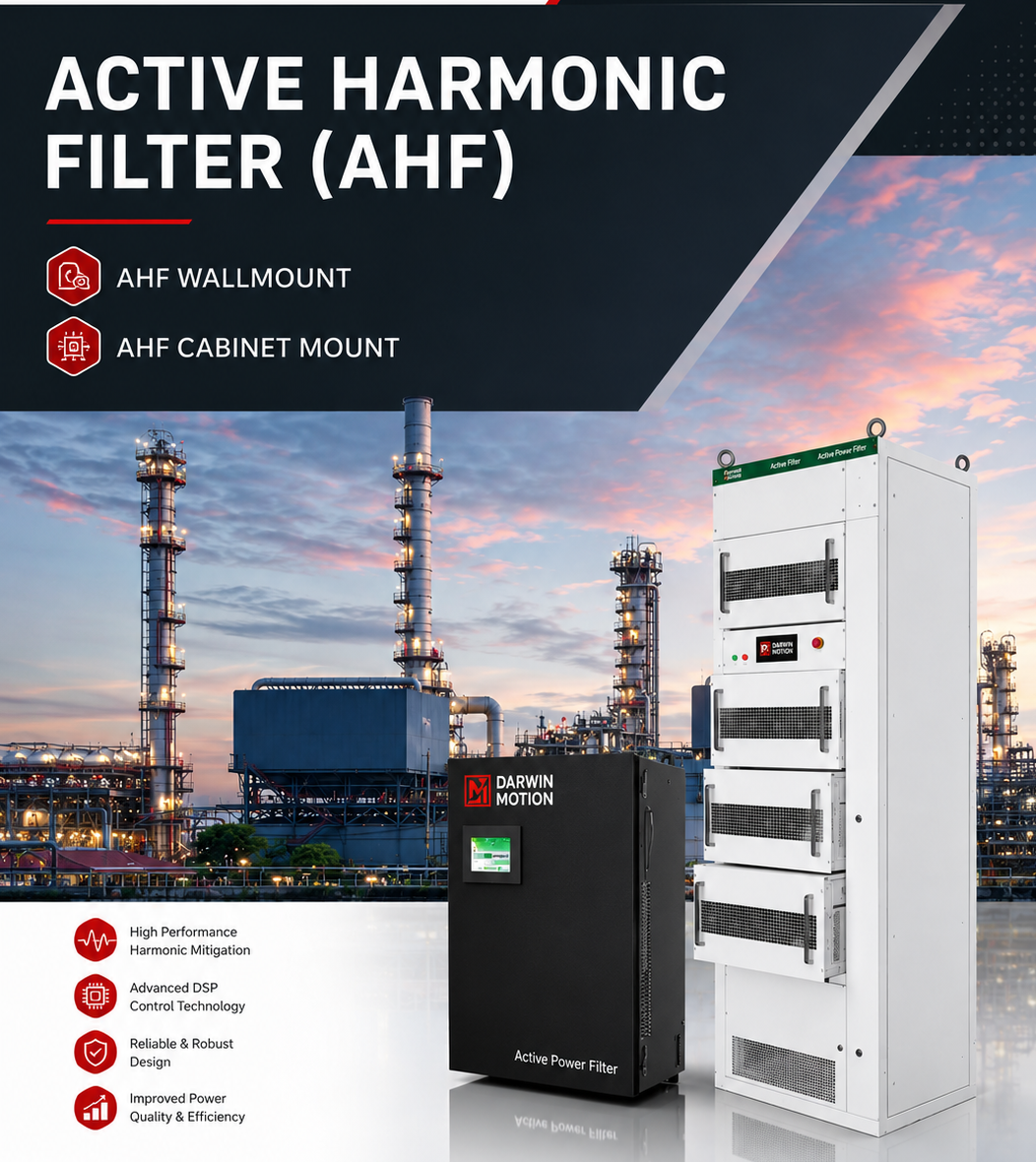
Water treatment plants depend on continuous and reliable electrical power for pumping, filtration, aeration, chemical dosing, sludge handling and other critical processes. Modern plants increasingly use Variable Frequency Drives (VFDs) to control pumps and motors efficiently. However, VFD-based equipment can introduce harmonic currents into the electrical network, potentially affecting power quality and the performance of connected equipment.
A properly designed Harmonic Filter for Water Treatment Plant can help mitigate harmonic distortion and create a cleaner electrical environment. Darwin Motion, a leading AC Drive manufacturer, provides power-quality solutions designed for industrial applications where reliable motor control and electrical performance are essential.
Water treatment facilities commonly operate a large number of motors, pumps, blowers, compressors and other electrical loads. VFDs provide precise speed control and can improve energy efficiency, but their power-electronic input stages can generate harmonic currents.
Excessive harmonic distortion may increase electrical losses and create additional stress on transformers, cables, switchgear and other equipment. In critical water infrastructure, these issues can contribute to unwanted trips, overheating and maintenance requirements. Studies and field applications have identified VFDs as an important source of harmonic distortion in water and wastewater facilities. :contentReference[oaicite:0]{index=0}
A harmonic filter is designed to reduce unwanted harmonic components generated by nonlinear loads such as VFDs. Depending on the plant's electrical architecture, load profile and harmonic study, active or passive filtering technologies may be considered.
An Active Harmonic Filter (AHF) continuously monitors the electrical system and generates compensating currents to counteract harmonic currents. This approach can be particularly useful in facilities with multiple VFDs and changing operating loads.
Water and wastewater treatment facilities contain several types of motor-driven systems where VFDs are frequently used. A harmonic mitigation solution can be considered for individual equipment, feeders or centralized electrical systems depending on the outcome of the harmonic study.
Raw water intake pumps may operate at different speeds depending on demand. VFDs provide precise control, while harmonic filtering can help manage the electrical impact of multiple variable-speed pump drives.
Booster pumps are essential for maintaining required water pressure. Reliable electrical operation is therefore important for uninterrupted water distribution.
Filtration processes may involve multiple motors, pumps and automated equipment. Improving power quality can support dependable operation of these interconnected systems.
Wastewater treatment plants often use large blowers for aeration. These motors can represent significant electrical loads, making power-quality management an important consideration.
Pumps, conveyors, mixers and other sludge-processing equipment can use variable-speed motor control. Harmonic filtering can help manage the cumulative effect of these nonlinear loads.
Precise motor speed control is often required for dosing and process applications. Stable electrical conditions can support the reliable operation of associated drives and control systems.
The selection of a harmonic mitigation technology should be based on the plant's electrical configuration, harmonic spectrum, load characteristics, future expansion plans and applicable power-quality requirements.
In a water treatment plant with several VFD-driven loads, an engineering study can help determine whether centralized or distributed harmonic filtering is the most appropriate approach. Real-world water-treatment applications have demonstrated that harmonic filtering can substantially improve measured power quality and support reliable plant operation. :contentReference[oaicite:1]{index=1}
Darwin Motion is an AC Drive manufacturer offering industrial motor-control solutions for demanding applications. Its product portfolio includes AC drives designed for applications such as pumps, fans, HVAC systems, compressors, conveyors and other industrial machinery.
For water and wastewater applications, combining efficient motor control with appropriate power-quality management can help create a reliable electrical infrastructure. Darwin Motion's expertise in AC Drive technology makes it a suitable technology partner for industries looking to improve motor control and optimize electrical performance.
Installing a harmonic filter without understanding the electrical system can lead to an improperly sized or ineffective solution. A detailed harmonic study should therefore be considered before selecting the filter.
Harmonic simulations and measurements can help determine the location and required capacity of the filter. In documented water-treatment applications, system studies have been used to evaluate harmonic levels before and after filtering and to support compliance with specified power-quality limits. :contentReference[oaicite:2]{index=2}
Pumping systems are among the most important electrical loads in water treatment facilities. VFDs allow pump speed to be adjusted according to process demand, helping operators avoid unnecessary full-speed operation. However, when many drives operate simultaneously, their combined harmonic contribution can become an important power-quality consideration.
A properly engineered harmonic filtering system can work alongside VFDs to reduce harmonic distortion while retaining the benefits of variable-speed motor control. This makes harmonic mitigation an important consideration when designing or upgrading modern water treatment plants.
Reliable power quality is essential for water treatment plants because pumps, blowers, filtration systems, automation equipment and other critical loads must operate consistently. As VFD adoption increases, managing harmonic distortion becomes an important part of modern electrical-system design.
A properly selected Harmonic Filter for Water Treatment Plant can help reduce harmonic distortion, improve power quality, protect electrical infrastructure and support reliable plant operation. By combining effective motor control with appropriate harmonic mitigation, Darwin Motion, an AC Drive manufacturer, can support industries seeking dependable and energy-conscious solutions for water and wastewater applications.


