Posted on 23rd Jul 2026
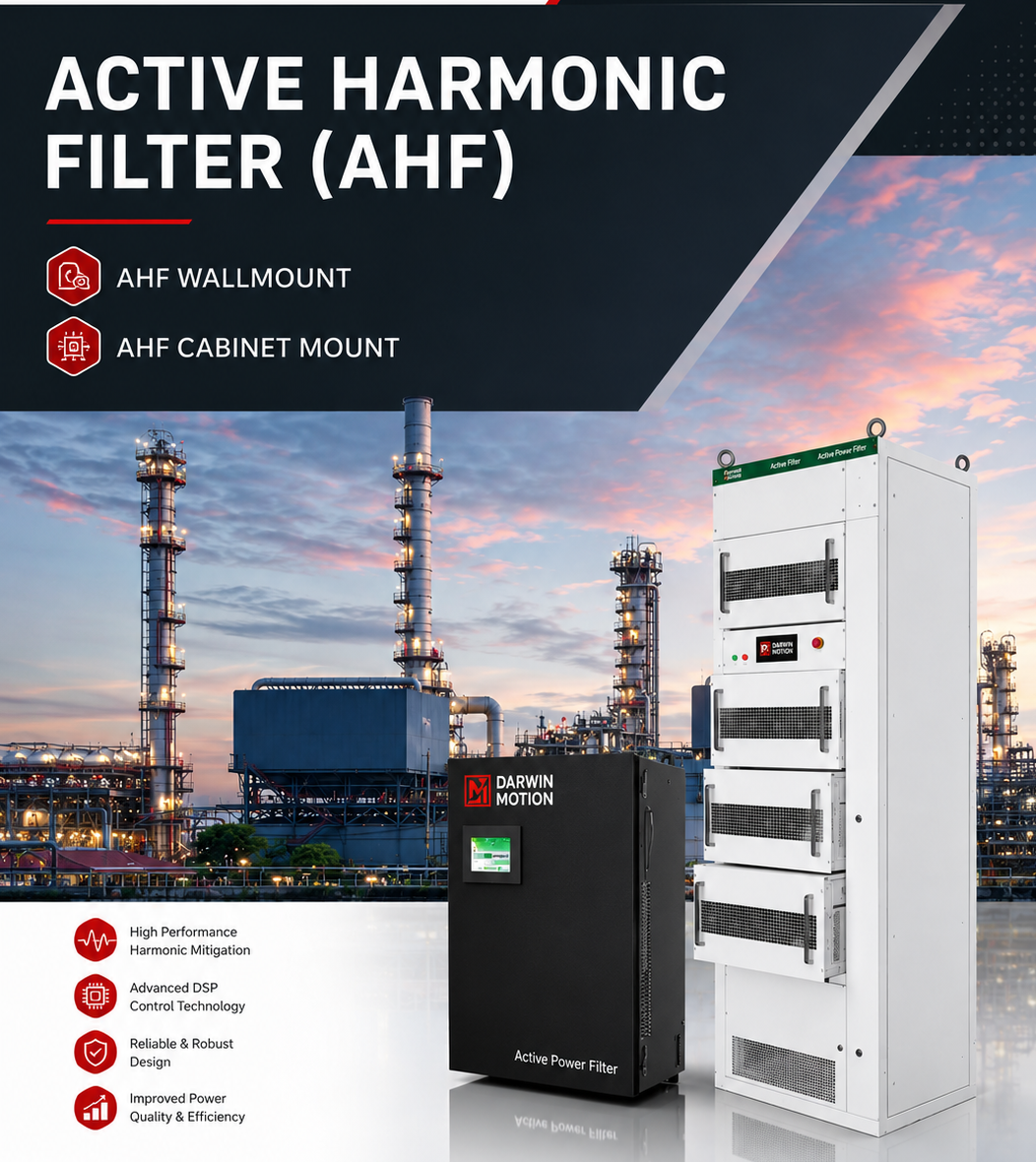
Modern industries depend heavily on automation systems, Variable Frequency Drives (VFDs), PLCs, servo drives, UPS systems, rectifiers, and renewable energy equipment. While these technologies improve efficiency, they also generate electrical harmonics that deteriorate power quality.
An IEEE 519 Harmonic Filter is designed to control harmonic distortion, ensuring compliance with the internationally recognized IEEE 519 standard while improving the overall reliability of electrical systems.
As a trusted Darwin Motion AC Drive Manufacturer, Darwin Motion offers intelligent Active Harmonic Filter solutions engineered to reduce Total Harmonic Distortion (THD), improve system stability, and enhance the performance of industrial electrical networks.
An IEEE 519 Harmonic Filter is a power quality solution developed to reduce harmonic currents and voltage distortion at the Point of Common Coupling (PCC). Its objective is to help industrial facilities maintain harmonic levels within the limits recommended by the IEEE 519 standard, minimizing interference with utility systems and sensitive electrical equipment. The IEEE 519 standard establishes design goals for harmonic control at the PCC to improve overall power quality. :contentReference[oaicite:0]{index=0}
Active Harmonic Filters continuously monitor electrical harmonics and inject equal but opposite harmonic currents in real time, effectively cancelling unwanted harmonic components.
Industries that fail to control harmonics may experience numerous operational issues that affect productivity and equipment life.
Installing an IEEE 519 Harmonic Filter significantly reduces these risks while improving electrical reliability.
Unlike conventional passive filters that are tuned for specific harmonic frequencies, Active Harmonic Filters dynamically detect harmonic currents across multiple harmonic orders and instantly inject compensating currents into the electrical system.
This intelligent compensation maintains excellent power quality under varying load conditions without requiring manual tuning.
Keeps harmonic distortion within acceptable design limits at the Point of Common Coupling (PCC), improving compatibility with utility requirements. :contentReference[oaicite:1]{index=1}
Reduces voltage distortion, current harmonics, electrical noise, and waveform distortion for smoother system operation.
Protects transformers, motors, generators, cables, switchgear, capacitors, and UPS systems from harmonic-related stress.
Reduced overheating and fewer electrical failures minimize maintenance expenses and unexpected downtime.
Cleaner power reduces unnecessary losses caused by harmonic currents, resulting in improved system efficiency.
Automatically responds to changing load conditions without interrupting plant operations.
Darwin Motion Active Harmonic Filters are suitable for a wide range of industries, including:
Darwin Motion has established itself as a reliable manufacturer of industrial automation and power quality solutions. Our Active Harmonic Filters are engineered using advanced digital control technology to deliver outstanding harmonic mitigation performance across a broad range of industrial applications.
Darwin Motion Active Harmonic Filters are widely installed in facilities operating:
Electrical harmonics can significantly impact industrial productivity, equipment reliability, and operating costs. Installing an IEEE 519 Harmonic Filter is one of the most effective ways to improve power quality, reduce Total Harmonic Distortion, protect valuable electrical assets, and align with the harmonic control objectives defined by the IEEE 519 standard. :contentReference[oaicite:2]{index=2}
If your facility operates VFDs, servo systems, UPS units, solar inverters, or other nonlinear loads, Darwin Motion provides reliable Active Harmonic Filter solutions tailored to your application's power quality requirements.
Enhance your plant's electrical performance with Darwin Motion's advanced Active Harmonic Filters—designed for superior harmonic mitigation, improved energy efficiency, and dependable industrial operation.


