Posted on 28th Oct 2026
Power Factor Correction is an important consideration for industries seeking better electrical performance, efficient motor operation, and reduced power distribution losses. In industrial facilities, electrical equipment such as induction motors, pumps, compressors, conveyors, and manufacturing machinery can influence the overall power factor of an electrical installation.
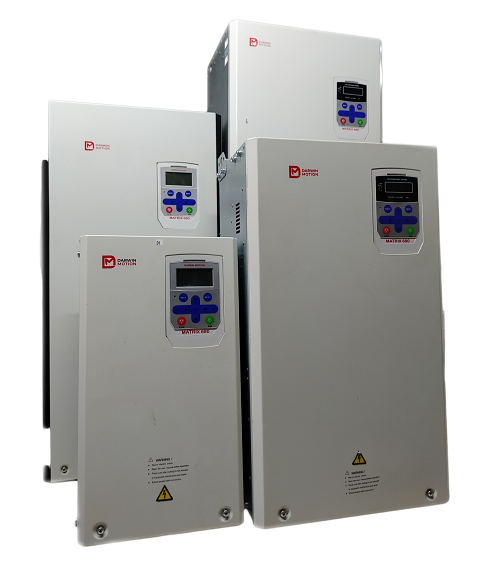
A properly designed power management strategy can help businesses improve electrical system performance, reduce unnecessary current flow, and make better use of their installed electrical infrastructure. Darwin Motion, an AC Drive manufacturer, offers variable frequency drive solutions designed to support precise motor speed control and efficient industrial operations.
Power factor correction is the process of improving the relationship between real power and apparent power in an AC electrical system. Power factor is expressed as a value between 0 and 1, with a value closer to 1 generally indicating more effective utilization of apparent power.
The power factor of an electrical system can be affected by inductive loads, including electric motors and transformers, as well as by harmonic distortion produced by certain electronic equipment. Appropriate correction methods depend on the type of load, operating conditions, and the electrical characteristics of the installation.
Power factor is calculated as the ratio of real power, measured in kilowatts (kW), to apparent power, measured in kilovolt-amperes (kVA).
Power Factor = Real Power (kW) / Apparent Power (kVA)
A low power factor means that more apparent power is required to deliver a given amount of real power. This can increase current demand and place additional loading on cables, transformers, and other electrical distribution equipment.
Industrial facilities often operate several electric motors and other inductive or nonlinear electrical loads simultaneously. Without appropriate power quality management, these loads can contribute to increased current demand, distribution losses, and power factor-related charges where applicable.
The correct power factor correction method depends on the connected equipment, load profile, harmonic levels, and the required electrical performance. Industrial engineers commonly evaluate the following approaches.
Capacitor banks are widely used to compensate for the lagging reactive power associated with inductive loads. They supply capacitive reactive power, reducing the amount of reactive power that must be drawn from the electrical supply.
Fixed capacitor banks can suit relatively stable loads, while automatic power factor correction panels switch capacitor stages according to changing load conditions.
Automatic power factor correction (APFC) panels monitor the power factor and control capacitor stages to maintain a selected operating range. These systems can be useful in manufacturing facilities where motor loads change throughout the working day.
AC drives, also known as variable frequency drives (VFDs), control motor speed by adjusting the frequency and voltage supplied to the motor. They can improve process efficiency by matching motor speed to actual operating requirements, particularly in variable-torque applications such as pumps and fans.
A conventional VFD may have a good input displacement power factor, but its rectifier can introduce current harmonics. Therefore, a standard AC drive should not automatically be considered a complete solution for every power factor or harmonic problem. The drive topology, input current distortion, and the facility's overall power factor must be evaluated.
Darwin Motion focuses on AC drive solutions for industrial motor control and automation applications. Selecting an appropriate AC drive can help businesses improve process control, manage motor speed, and support energy optimization initiatives.
When evaluating drive solutions, industrial users should consider motor ratings, supply voltage, load characteristics, operating environment, control requirements, and power quality needs. Choosing a drive that matches the application is essential for dependable performance.
To explore available drive solutions, visit Darwin Motion AC Drives and VFD solutions.
Power factor management and variable-speed motor control are relevant across a wide range of industrial sectors. The most suitable combination of technologies depends on the equipment and the operating profile.
A successful power factor improvement project begins with a review of the facility's electrical system. Installing correction equipment without measuring the actual load and harmonic conditions can lead to poor results or equipment compatibility issues.
Conventional power factor correction capacitors should not be installed directly at the output of a variable frequency drive unless the drive manufacturer explicitly approves the arrangement. Such connections can damage equipment or cause abnormal operation. Capacitor banks on the supply side may also require careful assessment when harmonics are present. Consult a qualified electrical engineer and follow the drive manufacturer's installation instructions.
Power factor correction is an important part of industrial electrical system management. By identifying the causes of low power factor and selecting suitable compensation methods, businesses can reduce unnecessary current demand, improve electrical distribution capacity, and manage power quality more effectively.
Alongside a well-designed power factor correction strategy, suitable variable frequency drives can help improve motor control and optimize energy consumption in appropriate applications. As an AC Drive manufacturer, Darwin Motion is a relevant option for businesses exploring industrial drive solutions for their motor control requirements.
Learn more about Power Factor Correction and explore Darwin Motion's AC drive solutions for your industrial application.


