Posted on 26th Oct 2026
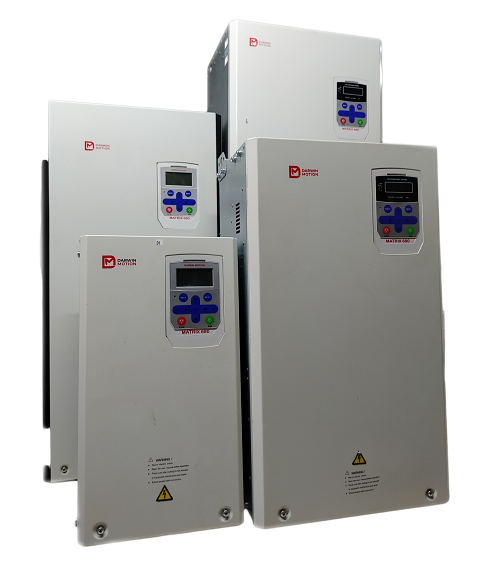
Cement manufacturing involves energy-intensive operations where electrical stability plays an important role in maintaining productivity and equipment performance. From crushers and raw material mills to rotary kilns, conveyors, and cement grinding systems, industrial motors operate under demanding conditions. Voltage fluctuations, harmonics, poor power factor, and sudden load variations can affect the reliability of these operations.
Implementing effective Power Quality for Cement Industry solutions helps manufacturers manage electrical disturbances, improve motor control, and support consistent plant performance. Darwin Motion offers industrial drive solutions designed to meet the operational requirements of modern manufacturing environments.
Cement plants depend on interconnected electrical equipment that must operate reliably throughout the production process. Electrical disturbances can affect sensitive control systems, increase equipment stress, and interrupt production schedules. Maintaining suitable power quality is therefore an important part of efficient plant management.
Common power quality challenges in cement plants include:
Variable Frequency Drives (VFDs) provide adjustable motor speed by controlling the frequency and voltage supplied to compatible AC motors. In cement manufacturing, this capability helps match motor operation to actual process requirements rather than running equipment continuously at full speed.
As a Darwin Motion AC Drive manufacturer, Darwin Motion provides drive solutions for industrial motor control applications where operational flexibility, process control, and energy management are important considerations.
VFDs can accelerate motors gradually, reducing starting current compared with conventional direct-on-line starting in suitable applications. This can help limit starting-related voltage dips and reduce mechanical stress on connected equipment. The actual improvement depends on the drive configuration, motor characteristics, and electrical network.
Cement production processes require different operating speeds depending on material flow and production demand. VFDs enable adjustable motor speed for applications such as conveyors, fans, pumps, and selected grinding processes, helping equipment operate according to process requirements.
Running a motor at an appropriate speed can reduce energy consumption in variable-torque applications, particularly fans and pumps. The potential savings depend on the operating profile, system design, and process requirements. Proper drive selection can help cement plants improve energy management without compromising production needs.
Adjustable motor speed supports more precise control of material handling, ventilation, and other industrial processes. This can help maintain consistent operating conditions, improve coordination between equipment, and reduce unnecessary variations in production.
Different stages of cement manufacturing place different demands on motors and electrical infrastructure. Selecting an appropriate drive solution requires an understanding of equipment characteristics, operating conditions, and load requirements.
Crushers and conveyor systems experience changing loads as raw materials move through the production line. Suitable drive systems can provide controlled motor operation and adjustable speed where the process allows it.
Grinding operations require dependable motor performance and carefully coordinated equipment. Drive solutions can support process control in compatible applications, while electrical system studies help determine the appropriate approach to harmonic management and power quality improvement.
Kiln-related auxiliary systems, including fans and material handling equipment, require reliable operation. Adjustable-speed drives can help regulate compatible motors according to operating requirements and support stable process conditions.
Fans, blowers, and pumps are important components of cement plant ventilation, cooling, and fluid handling systems. VFDs can regulate airflow or fluid delivery by adjusting motor speed, potentially reducing energy use in variable-demand applications.
Although VFDs provide valuable motor control capabilities, a VFD alone does not eliminate every power quality problem. In fact, drive input circuits can themselves contribute harmonic distortion. Cement plants should evaluate the entire electrical network when developing a power quality improvement strategy.
Cement manufacturers need electrical solutions that align with their production requirements, motor specifications, and plant operating conditions. Darwin Motion focuses on industrial drive technology for applications that demand controlled motor operation and dependable process performance.
Darwin Motion solutions can support industrial objectives such as:
Working with an experienced Darwin Motion AC Drive manufacturer helps businesses evaluate drive requirements according to motor ratings, load characteristics, environmental conditions, and production objectives.
An effective power quality strategy begins with identifying the causes of electrical disturbances. Plant operators can assess incoming power conditions, review major motor loads, measure harmonics, and examine voltage fluctuations before selecting appropriate corrective measures.
This systematic approach helps cement manufacturers make informed decisions about electrical infrastructure, operational efficiency, and equipment reliability.
Power quality is an important consideration for cement plants seeking reliable production, controlled motor operation, and efficient energy management. Voltage fluctuations, harmonic distortion, reactive power demand, and changing motor loads require solutions tailored to the plant's electrical characteristics.
With industrial VFD technology and a well-planned power quality strategy, cement manufacturers can improve motor control and address specific electrical challenges across their production facilities. Darwin Motion supports industrial motor control requirements with drive solutions designed for demanding applications.
Looking to improve motor control and explore suitable drive solutions for your cement manufacturing facility? Connect with Darwin Motion to discuss your application requirements and identify the right approach for your industrial operations.
Explore industrial drive solutions: Discover Darwin Motion VFD Solutions


