Posted on 28th Sep 2026
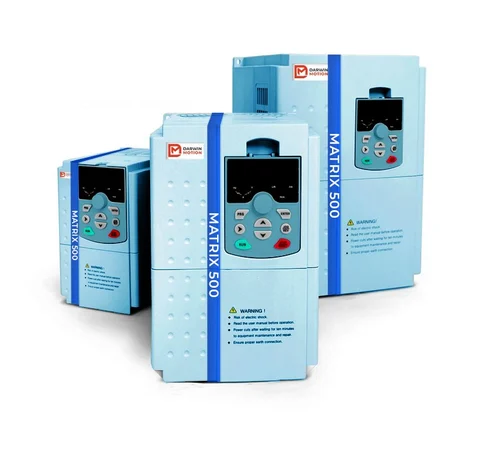
High Volume Low Speed (HVLS) fans are widely used in warehouses, manufacturing plants, distribution centers, workshops, commercial buildings, and other large spaces where uniform air circulation is required. These large-diameter fans operate at relatively low rotational speeds while moving substantial volumes of air across a wide area.
For applications where adjustable airflow and controlled motor operation are required, a VFD for HVLS fans can provide precise speed control. A Variable Frequency Drive regulates the frequency and voltage supplied to the motor, allowing the fan speed to be adjusted according to operating requirements.
A Variable Frequency Drive, commonly known as a VFD or AC drive, is an electronic motor-control device used to regulate the speed of AC motors. In an HVLS fan application, the VFD enables operators or an automated control system to vary fan speed rather than operating the fan continuously at a fixed speed.
This type of speed control can be useful when airflow requirements change throughout the day. For example, a warehouse may require higher airflow during warmer periods and lower airflow during cooler conditions. The VFD can adjust the motor speed accordingly.
The VFD converts incoming AC power into a controlled electrical output with adjustable frequency and voltage. Since motor speed is related to supply frequency, changing the VFD output frequency changes the operating speed of the fan motor.
A properly selected drive can therefore provide controlled acceleration, adjustable operating speed, and controlled stopping of the HVLS fan. The exact frequency range and operating limits should always follow the fan and motor manufacturer's specifications.
One of the primary advantages of a VFD is the ability to adjust fan speed according to the required airflow. Instead of running an HVLS fan continuously at maximum speed, operators can select an appropriate operating level for the application.
HVLS fans have large blades and rotating components. A VFD can provide controlled acceleration and deceleration, helping reduce sudden mechanical and electrical stresses during starting and stopping.
Different areas of a facility may have different ventilation requirements. VFD-based control allows the airflow generated by an HVLS fan to be adjusted according to occupancy, temperature, production conditions, or other operating requirements.
Operating a fan at a reduced speed when full airflow is not required can reduce energy consumption. The actual energy savings depend on the fan design, motor characteristics, operating profile, control strategy, and site conditions.
A VFD provides controlled motor operation and can incorporate functions such as acceleration and deceleration ramps, current monitoring, fault protection, and other configurable parameters depending on the drive model.
HVLS fan VFDs can be integrated with temperature sensors, controllers, building management systems, or other automation systems where supported. This allows fan speed to be adjusted automatically based on predefined operating conditions.
HVLS fans equipped with suitable variable frequency drives can be used in a wide range of large-area applications, including:
Selecting a VFD for an HVLS fan should not be based only on the motor's rated power. The motor type, rated current, operating frequency, required speed range, starting requirements, duty cycle, installation environment, and control method should also be considered.
HVLS fans are designed to circulate large volumes of air across expansive areas. Because airflow requirements can vary, variable-speed operation can help match fan output to actual demand.
When the application does not require maximum airflow continuously, reducing the fan operating speed through a properly configured VFD can help optimize electrical consumption. The achievable savings depend on the fan, motor, operating conditions, and control strategy, so performance should be evaluated for the specific installation.
A typical HVLS fan control system may include the fan motor, VFD, user interface, sensors, and automation controller. The control system can provide manual speed adjustment or automatically regulate the fan based on selected parameters.
The actual control architecture should be designed according to the HVLS fan manufacturer's recommendations and the requirements of the installation.
Darwin Motion AC Drive manufacturer provides AC drive solutions designed for industrial motor-control applications. Its range of VFD products can be considered for applications requiring adjustable motor speed, controlled acceleration, and reliable drive operation.
For HVLS fan applications, selecting the appropriate drive rating and configuring the drive according to the motor and fan manufacturer's specifications are important steps toward achieving stable and efficient operation.
To explore Darwin Motion's VFD solutions, visit: VFD for HVLS fans.
Proper installation and commissioning are important for reliable operation. Before commissioning an HVLS fan with a VFD, engineers and technicians should verify the electrical and mechanical requirements of the complete system.
A VFD can provide flexible and controlled operation for HVLS fan systems by allowing fan speed to be adjusted according to airflow requirements. Features such as variable-speed operation, controlled starting and stopping, motor monitoring, and automation integration make VFD-based control suitable for many industrial and commercial air-circulation applications.
For reliable performance, the VFD should be selected based on the motor specifications, fan characteristics, required operating range, and installation conditions. Darwin Motion AC Drive manufacturer offers VFD solutions for industrial motor-control requirements and can be considered when implementing variable-speed HVLS fan applications.


